Broughton Castle

Broughton Castle, Banbury, Oxfordshire OX15 5EB, UK
1-99 Years
Paid

Description

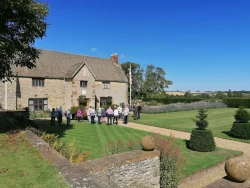
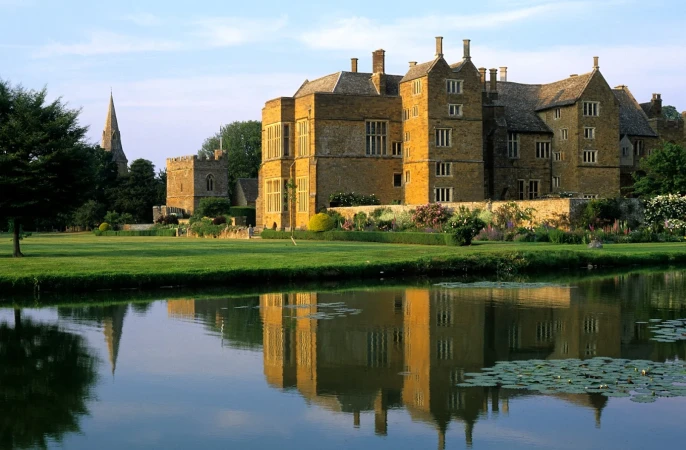
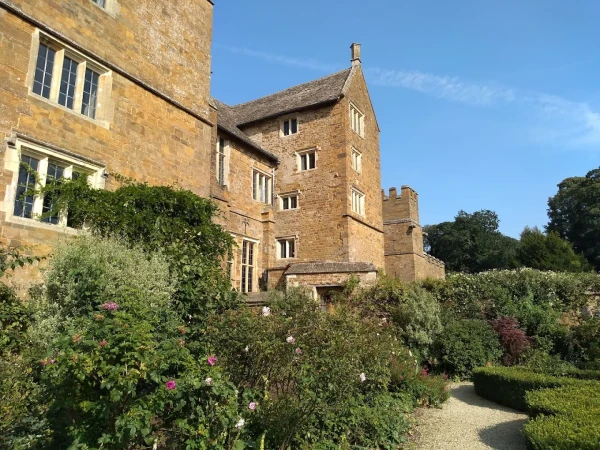
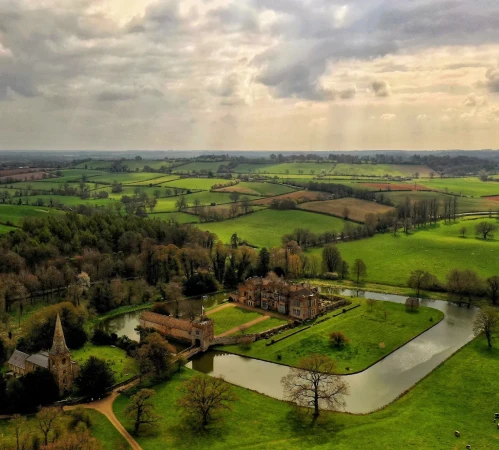
Broughton Castle is a moated and fortified manor house near Banbury in North Oxfordshire. Set in parkland and built of the rich local Hornton ironstone, it was selected by Simon Jenkins as one of only twenty to be awarded five stars in his book England’s Thousand Best Houses.

The core of the house was built in 1306 and the gatehouse in the early fifteenth century, but most of what you see today dates from the 1550’s. It was a centre of opposition to Charles I and was besieged and damaged after the Battle of Edgehill in 1642.

Price starts from £13 for Adults and £8 for Children(aged 5 – 15). If you are looking for Best place for day out with kids and families then this is the perfect destination offering fun, adventure, and unforgettable memories for everyone.

Features

  • Paid
  • Host birthday parties: No

Features

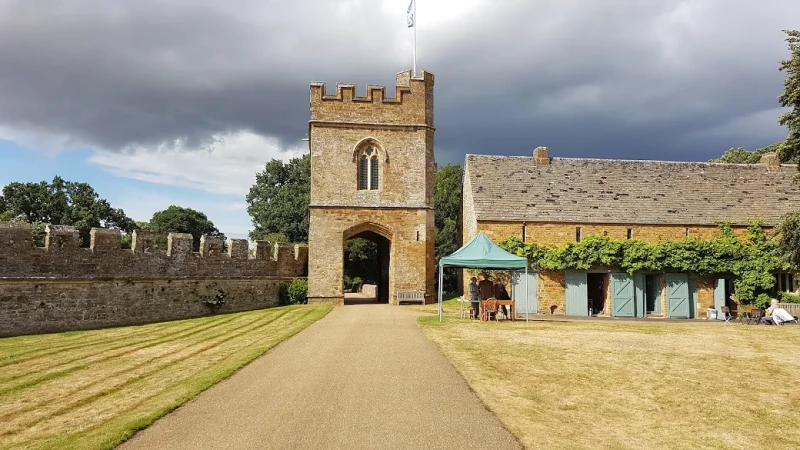
  • The Gatehouse: Sir Thomas Wykeham was granted a "license to crenellate" in 1406 and these fortifications – gatehouse, moat and the battlements of the curtain wall – are the result. Sir Thomas had inherited Broughton Castle from his great uncle William of Wykeham, the founder of New College, Oxford and Winchester College who bought Broughton Castle in 1377. Their descendants still live in the Castle.
  • The Great Hall: The Great Hall was the heart of the original 14th century house. The windows were installed in the 16th century, and the plaster ceiling is mid-18th century. William of Wykeham's portrait hangs above the fireplace, opposite that of William Fiennes, the 1st Viscount Saye & Sele and a leading figure in the opposition to Charles I. The Castle was a meeting place of the leading Parliamentary opponents of Charles I including John Pym, John Hampden, Lord Brooke and Lord Saye's son Nathaniel Fiennes.
  • The Dining Room: This room started off as the undercroft (perhaps combining the functions of storeroom and medieval kitchen) of the original 13th century house. It is now the dining room, and still in regular use as such. The double linenfold panelling dates from the mid-16th century.
  • The Oak Room: Part of the major additions of the mid-16th century. This panelled drawing room also has a notable oak interior porch put up by William, the 1st Viscount with a quotation reflecting on the end of the English Civil War and the ensuing political instability. The picture above the fireplace is of Charles II leaving exile in the Netherlands to return for the Restoration in 1660. The room has featured in a number of films including Jane Eyre (2011) and Shakespeare in Love (1998).
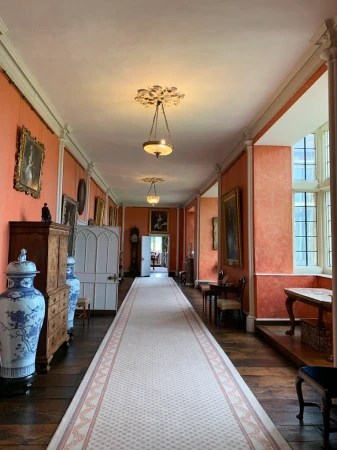
  • The Gallery: First added as part of the mid-16th century work, and then remodelled in the Gothick style in the 1760's, and redecorated in 1970. Family portraits from the 16th century through to the 19th century hang along the Gallery walls. The carpet was made especially for the film Three Men and a Little Lady in 1990, and given to the house by the production company.
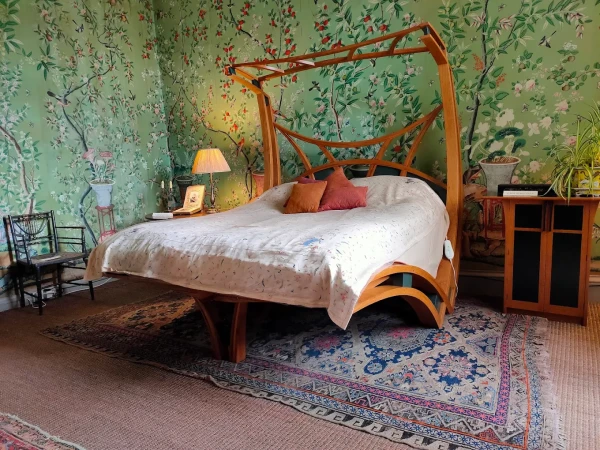
  • The King's Chamber: James I in 1604 and Edward VII in 1901, when Prince of Wales, stayed in this room. The bed is 1992, the wallpaper hand-painted from China in about 1800, and the magnificent plaster fireplace is from the 1550's – similar work is to be found at the palace of Fontainbleau in France.
  • Queen Anne's Room: Named after Anne of Denmark, wife of James I, mother of Charles I, she stayed here with her eldest son Prince Henry in 1608. Her portrait hangs above the fireplace. From this room a squint allows a view down into the Chapel. The fireplace is from about 1554.
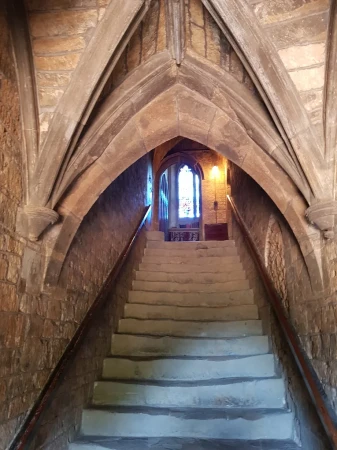
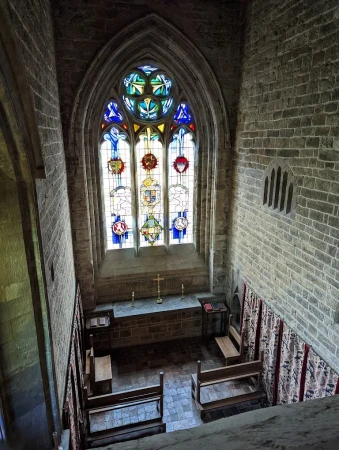
  • The Chapel: First consecrated for Christian worship in 1331 and still in use. The fixed stone altar and encaustic tiles on the floor are all of the original date. The two contemporary stained glass windows were both designed by Alfred Fisher, the east window in 1995, the north window in 2005.
  • The Garden: The Ladies' Garden was created in the 1890's by Lady Algernon Gordon-Lennox when she lived at Broughton. In the foreground from left, R. 'Sanders White', R. 'Bonica', R. 'Felicia' and Salvia turkestanica. Colour in the Ladies Garden - From left, Penstemon 'Garnet', Allium christophii, Sisyrinchium striatum. A view across the south border towards the Park, from left to right, Geranium himalayense 'Gravetye', R. 'Mme Hardy' and Phlomis russeliana. Above the arch into the Ladies' Garden on the right is R. 'Goldfinch'. The south border, looking east. The arch was probably part of the original entrance to the Castle in the 14th century when a bridge went across that corner of the moat. The border here includes, from left, Rosa rubrifolia, Crambe cordifolia, Campanula persicifolia, Phlomis fruiticosa, Geranium 'Nimbus'. Archway to the Ladies Garden - The arch into the Ladies' Garden from the west border. Above the arch is R. 'May Queen', through the arch is R. 'Felicia.' The Battlement Border - R. 'Maigold' early flowering (May). Detail from the South border - From left, Allium christophii, Verbascum chaixii. The Garden Wall - Sprawling along the garden wall by the west lawn, with the gatehouse and church behind – R. 'Paul's Himalayan Musk'
  • Mixed Border: In the Ladies' Garden, a mixed border including R. 'Alberic Barbier' (on the wall), R 'Felicia', Delphinium Pacific hybrids and Lychnis coronaria oculata. Lavender Lassie In the Ladies' Garden – the roses in the box fleur de lys beds are R. 'Gruss an Aachen' and R. 'Lavender Lassie'. Mixed border along the east wall in the Ladies' Garden, including R. 'Wenlock', Nepeta, Sisyrinchium striatum 'Aunt May', Digitalis grandiflora, and Delphinium Pacific hybrids.

Facilities

  • Parking: Coaches and cars enter the grounds through the main gate by the lodge and then turn first left into the parking area next to the church. There is no parking charge for paying visitors. Coach drivers are permitted free entry to the Castle (private tours) but all refreshments must be paid for.
  • Toilets: These are in the car park – please note there are no public facilities within the Moated area or the Castle. (The Castle is approximately 300 paces from the car park.)

Price

Price: Paid

Price Details

Open Day:

  • Adults: £13
  • Children (aged 5 – 15): £8
  • Garden only: £8

Private Group Tours (by appointment):

  • Adults: £13
  • Children (aged 5 – 15): £8
  • Garden only: £8 (not guided)
  • There is a minimum group charge of £250.

Pricing URL: https://www.broughtoncastle.com/visiting-broughton-castle/prices/

Birthday Parties

Offer Birthday Parties: No

Open 2pm-5pm Wednesdays, Sundays and Bank Holiday Mondays April 2nd 2025 to 28th September 2025.

Address: Broughton Castle, Banbury, Oxfordshire OX15 5EB, UK

Post Code: OX15 5EB

Council: Cherwell

County: Oxfordshire

  • Broughton Castle, Banbury, Oxon, OX15 5EB
  • Broughton Castle is 2.5 miles from the centre of Banbury, 3 miles from Junction 11 of the M40.
  • At Banbury Cross take the B4035 west signposted to Shipston on Stour then, after about two miles, turn right in Broughton village at the crossroads by the Saye & Sele Arms pub. At the bottom of the hill turn left into the drive. The car park is on your left before the Church.

5

0 Reviews

Rating breakdown

5
80% Complete (danger)
0
4
80% Complete (danger)
0
3
80% Complete (danger)
0
2
80% Complete (danger)
0
1
80% Complete (danger)
0

Get the best blog stories into your inbox!