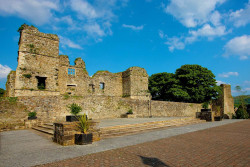
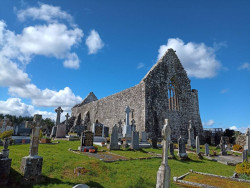
Creevelea Friary

Creevelea Friary, Creevelea, County Leitrim, Ireland
1-90 Years

Description

Creevelea Franciscan Friary forms an exceptional, historic 16th-century medieval sanctuary standing beautifully on the banks of the scenic River Bonet on the outskirts of Dromahair in County Leitrim. Offering an educational, open-air day out, it ranks among the most fascinating historical things to do with kids in Leitrim, providing families with a direct window into late medieval monastic life. The multi-part destination features a remarkably complete church layout containing a nave, choir, south transept, and a massive central bell-tower.

Admission to this state-owned National Monument in the care of the Office of Public Works (OPW) is completely free for all adults, children, and family groups, serving as a brilliant budget-friendly heritage outing. There are no commercial ticketing turnstiles, admission gates, or pre-booked entry slots required to explore the site. Families are welcome to wander through the expansive ruins and the adjoining active community burial grounds completely at their own leisure.

If you are looking for an authentic spot for a family day out that seamlessly weaves together stories of Gaelic chieftains, medieval architecture, and peaceful riverbank walks, this friary ruin is a top choice. It beautifully balances vast historic dimensions with a quiet, uncrowded countryside atmosphere where children can safely explore a labyrinth-like historic footprint. Parents will appreciate the high educational value, the lack of commercialism, and the stunning photographic backdrops against Leitrim’s rural landscape.

Features

  • Free
  • Host birthday parties: No

Features

Features

  • Educational Day Out: The historic grounds allow children to connect real-world timelines, tracing the site as the very last Franciscan friary founded in Ireland before King Henry VIII dissolved the monasteries.
  • Interactive Exhibits: The open-air, unguided layout gives kids a tactile learning experience where they can search for intricate stone carvings and examine old window mullions firsthand.
  • Sensory Play: The peaceful, grassy churchyard boundary provides natural sensory stimulation, filled with the sounds of the rushing River Bonet, rustling pasture grass, and the varied textures of ancient masonry.

Detailed Highlights

  • The St Francis Preaching to the Birds Carving: Found within the remaining cloisters is a beautifully detailed stone carving depicting Saint Francis of Assisi preaching directly to a group of birds. It provides a fantastic focal point to spark kids' imaginations and matches stories of ancient folklore.
  • The Refined East Window: Dominating the choir wall is an elegant, well-preserved east window featuring a particularly delicate late-medieval structural layout. It acts as a stunning visual aid for explaining ancient craftsmanship and design to older children.
  • The Living Quarters Bell-Tower: Rising directly over the main church sanctuary stands a imposing stone bell-tower. Kids will be fascinated to learn that this high tower was completely converted into residential living quarters during the 17th century.
  • The Labyrinth-Like Domestic Ruins: Extending northward from the main church is an extensive network of domestic rooms including the old chapter house, sacristy, and bakehouse. They give children an immersive sense of stepping inside a grand, roofless castle maze.
  • The Window Mullion Artworks: Carved into the stone base of almost all the remaining window frames are small, beautifully preserved medieval decorations. These hidden stone patterns provide an excellent real-world treasure hunt for younger children.

Detailed Inventory

  • The 1508 Monastic Foundation Footprint: The original sacred clearing established by Margaret O'Brien and her husband Eoghan O'Rourke, Lord of West Breifne.
  • The Margaret O'Brien Burial Tomb Site: The documented 1513 final resting place of the co-foundress, located inside the main church boundary.
  • The 1536 Accidental Fire Marks: Subtle structural changes across the oldest stone sections indicating the site of a devastating historical fire.
  • The Bryan Ballach O'Rourke Remodeling Areas: Structural updates showing where the founders' son subsequently rebuilt and restored the complex.
  • The 17th-Century Thatched Roof Anchors: Architectural evidence showing where the massive church structure was later modified with a rustic thatched roof.
  • The Charles O'Conor Hedge School Ground: The historic spot where the famous 18th-century antiquarian received his early education from the last remaining friars.
  • The 1800s Water Mill Complex: The visible ruins of a later nineteenth-century industrial water mill structure that can be viewed directly from the abbey vantage point.

Facilities

  • Toilets: There are no public toilets or baby-changing cubicles within the open-air monument enclosure. Public facilities can be found inside the local family diners and village businesses of Dromahair just a short drive or walk away.
  • Buggy Parking & Accessibility: There is no dedicated indoor buggy storage or paved reception area at these open ruins. While the paths along the river from the village are paved, the immediate abbey entrance involves open sheep pastures, kissing gates, and uneven grass turf, making a baby carrier highly recommended over a stroller.
  • Lockers: No secure cloaking counters or luggage lockers are provided on site. Families should carry light, portable daypacks.
  • Food Options: No commercial cafes or snack bars operate directly inside the historic monument grounds. Conveniently, the ruins sit moments from Dromahair village, letting families walk straight to local family-friendly restaurants and tea rooms.

What to see

What Visitors Love

  • Completely free admission makes it a fantastic, zero-cost historical pitstop when exploring County Leitrim.
  • The combination of a massive tower, labyrinth-style rooms, and unique bird carvings provides an impressive atmosphere that keeps kids captivated.
  • The paved riverside walk from Dromahair village makes the journey to the ruins an enjoyable outdoor activity in itself.
  • Clear, informative on-site heritage signage makes it easy for parents to explain the medieval history to their kids without a guide.

What Visitors Don't Like

  • The lack of a visitor pavilion or on-site rain shelter means a sudden shower can cut your outdoor exploration short.
  • The site is an active graveyard, meaning families must ensure children remain calm and respectful around the local burial plots.

Targeted FAQ

  • Is Creevelea Friary suitable for toddlers?: Yes, for a short riverside stroll. However, due to the historic grave markers, low stone walls, and pasture terrain, close hand-holding or using a comfortable baby carrier is highly recommended.
  • How long does a visit to the monastic ruins take?: A standard family walk to explore the cloisters, central tower, and historic domestic rooms takes between 30 and 45 minutes.
  • Where is the best place to park for the friary?: Families can use the free parking lot situated right next to the modern graveyard, or park in Dromahair village and enjoy a short walk along the riverbank path.

Price

Price: Free

Birthday Parties

Offer Birthday Parties: No

  • Monday to Sunday: Open 24 hours daily
  • Seasonal Access: Open all year round, though daytime visits are strongly advised because the unguided ruins, ancient cemetery grounds, and deep stone thresholds are completely unlit at night.

Address: Creevelea Friary, Creevelea, County Leitrim, Ireland

Post Code: F91

Council: Leitrim County Counc

County: County Leitrim

  • By Car & Parking: From Dromahair, head southwest along the local R287 road just out of town. The abbey turnoff is clearly signposted on the right-hand side, where you can park your vehicle next to the modern graveyard parking lot. Alternatively, park in Dromahair village centre and enjoy the short, scenic walk along the marked Sligo Way footpath.
  • By Bus: Regular regional bus routes operate into the heart of Dromahair village from major hubs like Sligo town. Disembark at the main village stop, cross the pedestrian bridge near the Abbey Manor Hotel, and follow the scenic riverside path directly to the ruins.

0.00

0 Reviews

Rating breakdown

5
80% Complete (danger)
0
4
80% Complete (danger)
0
3
80% Complete (danger)
0
2
80% Complete (danger)
0
1
80% Complete (danger)
0

Get the best blog stories into your inbox!