Donnington Castle

Description

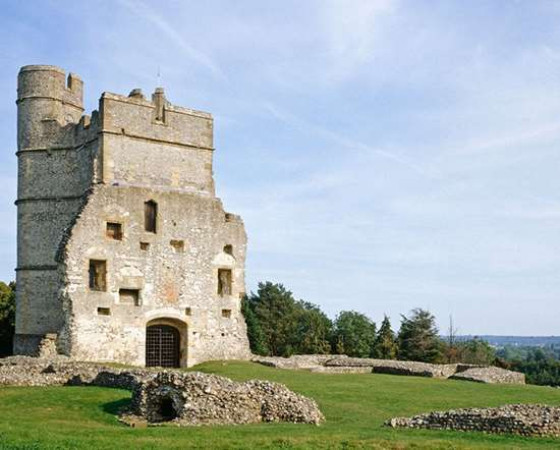
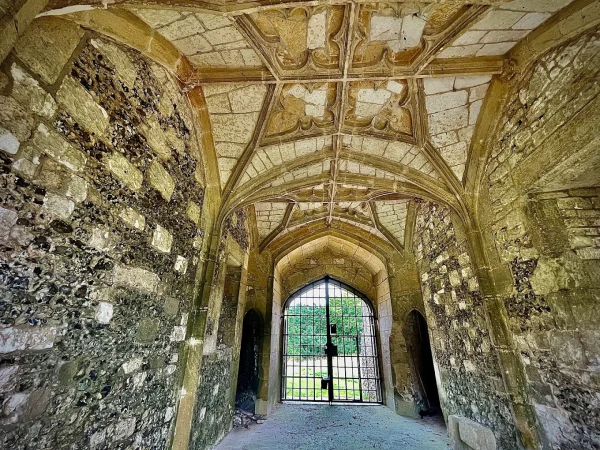
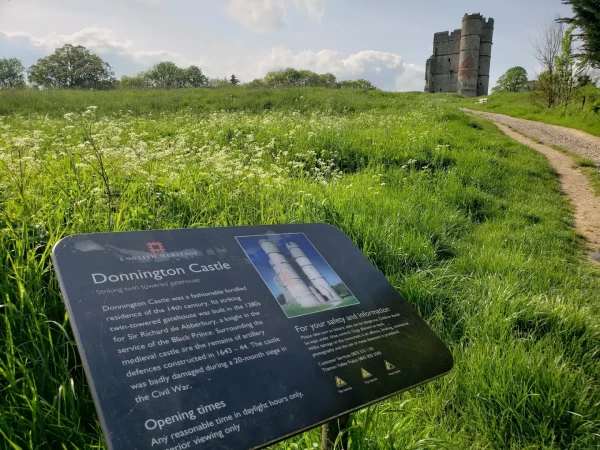
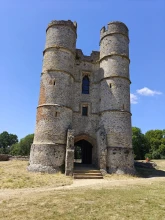
Donnington Castle, The striking twin-towered gatehouse of 14th century Donnington Castle, near Newbury, survives within impressive earthworks. It shows the luxury enjoyed by Sir Richard Abberbury, Donnington's builder, whose private quarters lay within it. Both Henry VIII and Elizabeth I are thought to have stayed here.

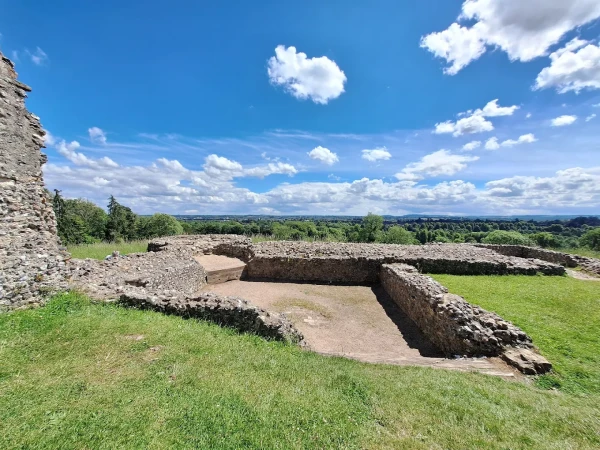
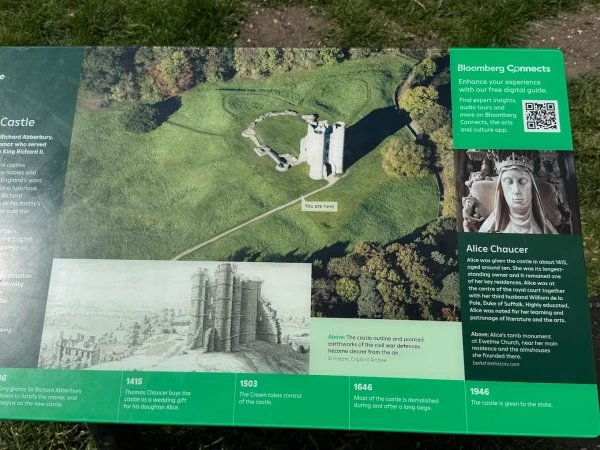
The large defences built to protect the castle during the English Civil War still survive. Donnington Castle was built in the late 14th century by Sir Richard Abberbury, a soldier, courtier and diplomat who served the Black Prince and his son Richard II. More luxurious residence than fortress, it was one of several castles built around this time by nobles and gentry who had profited from England’s wars with France.

Free Entry. If you are looking for Best place for day out with kids and families then this is the perfect destination offering fun, adventure, and unforgettable memories for everyone.

Features

  • Paid
  • Host birthday parties: No

Features

  • History of Donnington Castle: Donnington Castle was built in the late 14th century by Sir Richard Abberbury, a soldier, courtier and diplomat who served the Black Prince and his son Richard II. More luxurious residence than fortress, it was one of several castles built around this time by nobles and gentry who had profited from England’s wars with France.
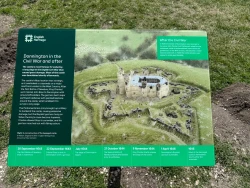
  • Taken into royal control in 1503, Donnington remained a prestigious residence in the 16th century, notably being fought over by Elizabeth Russell, its keeper under Elizabeth I, and the Earl of Nottingham. It played a major role during the English Civil War, when it endured a 20-month siege. After the castle’s surrender, most of it was demolished, and only the magnificent gatehouse was left standing.
  • Sir Richard Abberbury: The Abberbury family had owned the large manor of Donnington since 1287, when it was bought by Thomas Abberbury. He was an ordained clergyman who had risen through the church hierarchy. By the mid 14th century the family owned several manors in Oxfordshire and Berkshire, and around 1353 Richard Abberbury (c.1330–1399), the builder of the castle, inherited the Berkshire properties.
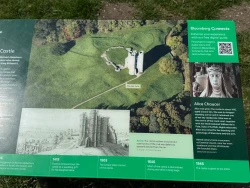
  • The castle design: Even though most of the castle was demolished in 1646, there is enough evidence for us to imagine how it looked when first built.
  • It was roughly rectangular, enclosed by a curtain wall, with a round tower at each corner and two square towers halfway along the longer sides. There were minimal defences: the main walls were only 1.5 metres thick, with no moat or arrow-loops. It was designed more as a country house with the trappings of a castle rather than a defensible fortress.
  • The manor of Donnington: As well as building an impressive castle, in 1366 Sir Richard founded a chantry chapel (a private chapel, where masses were said for the souls of its benefactors) at Donnington. In 1376 he gave part of its endowment to the Friars of the Holy Cross, in the City of London, in return for them providing two friars to serve as priests in the chapel. In 1393 he also founded a hospital at Donnington, to house a minister and 12 poor men drawn from the Abberburys’ tenants and servants.
  • Donnington in the 15th century: Sir Richard’s elder son, also Sir Richard (d.1416), inherited the main Abberbury estates, including Donnington. Having been in the service of John of Gaunt and his son Henry Bolingbroke, and accompanied the latter on his ‘crusade’ in eastern Europe, he was seemingly well placed to weather the change of regime in 1399–1400. But his career did not prosper: he stayed abroad for most of Henry IV’s reign, and on his return to England in about 1415, for unknown reasons sold all the estates he had inherited from his father. He sold Donnington and five other manors to Thomas Chaucer for 1,000 marks (£666).
  • Alice Chaucer: Alice Chaucer’s third husband, William de la Pole, Earl of Suffolk (1396–1450), was another long-serving commander in France. Steward of the Household to Henry VI, he became the king’s first minister and was created Duke of Suffolk in 1448. Alice became part of the inner court circle. After Suffolk negotiated Henry VI’s marriage to the French princess Margaret of Anjou in 1444, Alice became one of her ladies-in-waiting.
  • A secret marriage: Alice’s son, John, inherited the de la Pole estates on her death. His marriage to Elizabeth of York meant that his son Edmund became the chief heir to the Yorkist claim to the throne after the deaths in 1483 of Edward IV’s sons (the Princes in the Tower), their uncle Richard III in 1485, and Edmund’s elder brother John in 1487.

Facilities

  • Parking: Car parking is available on site with a £2 charge for non-members payable by text. Parking is free for Members with a valid English Heritage car sticker on display.
  • Food & Drinks: The market town of Newbury is 2 miles away. There you will find a wide variety of cafes, restaurants, shops and facilities.
  • Dogs: Dogs on leads are welcome.

Birthday Parties

Offer Birthday Parties: No

Open any reasonable time during daylight hours.

Address: Donnington, Newbury RG14 2LE, UK

Post Code: RG14 2LE

Council: West Berkshire

County: Berkshire

  • Road Access: 1 mile north of Newbury, off B4494.
  • Bus Access: Newbury & District services 4, 6, 6A, 107 & Go-Ride services 5 & 5A.
  • Train Access: Newbury 1 1⁄4 miles.
  • Bicycle Access: Find this site on The National Cycle Network.
  • Parking: Car parking is available on site with a £2 charge for non-members payable by text. Parking is free for Members with a valid English Heritage car sticker on display.

0

0 Reviews

Rating breakdown

5
80% Complete (danger)
0
4
80% Complete (danger)
0
3
80% Complete (danger)
0
2
80% Complete (danger)
0
1
80% Complete (danger)
0

Get the best blog stories into your inbox!