Maiden Castle

Maiden Castle Road, Dorchester, Dorset DT2 9PP, UK
1-99 Years

Description

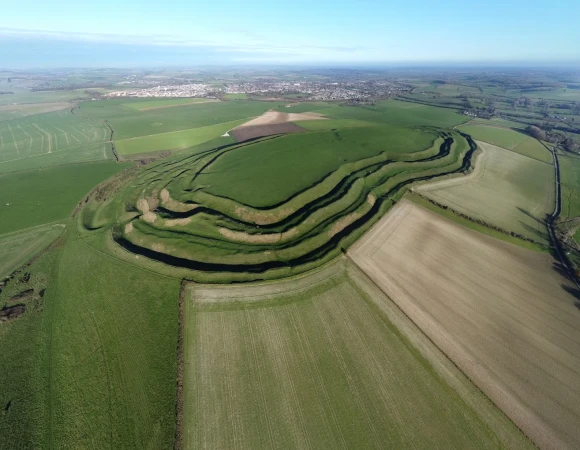
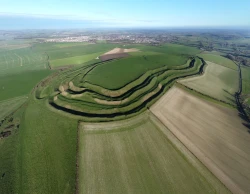
Maiden Castle in Dorset is one of the largest and most complex Iron Age hillforts in Europe – the size of 50 football pitches. Its huge multiple ramparts, begun about 2,400 years ago, once protected hundreds of residents. When it was first built, the gleaming white chalk ramparts would have towered over the surrounding landscape.

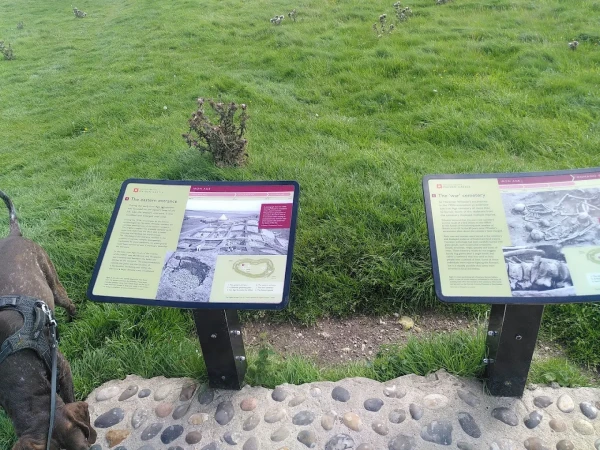
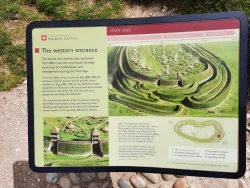
Sheep provide a natural way for us to maintain the grass on site, but they have damaged the interpretation panels. We're working on finding a long-term sheep-friendly solution. In the meantime, download our free digital guide on the Bloomberg Connects app to hear expert insights as you explore. You can also discover Echoscape, our immersive audio experience. 

Free Entry. If you are looking for Best place for day out with kids and families then this is the perfect destination offering fun, adventure, and unforgettable memories for everyone.

Features

  • Free
  • Host birthday parties: No

Features

  • History of Maiden Castle: Maiden Castle is one of Europe’s largest and most impressive Iron Age hillforts, covering an area bigger than 50 football pitches. Work on the complex defences began about 2,400 years ago and continued for 300 years. At the hillfort’s peak, hundreds of people lived here.
  • Excavations in the 1930s showed that the hillfort replaced a smaller fort built earlier in the Iron Age, which in turn overlay two Neolithic monuments, built about 5,500 years ago. An Iron Age cemetery included men and women who may have died fighting the invading Romans. Around AD 370, a Romano-British temple was built within the long-deserted hillfort.
  • Early Neolithic monuments: Maiden Castle is one of the richest early Neolithic sites excavated in southern Britain. Excavations in the 1930s showed that activity on the hilltop began about 3,000 years before the first hillfort was built. Neolithic farmers sailed to Britain from mainland Europe, bringing the first cereal crops, cattle, sheep, timber buildings, pottery, and new types of stone tools. They built Britain’s first surviving monuments: ‘long barrows’. These elongated burial mounds – one of which overlooks the car park at Maiden Castle – sometimes contained the bones of dozens of people.
  • Bronze Age burial mounds: After the Neolithic monuments were abandoned, the hilltop remained almost deserted for over 1,000 years. During the Bronze Age, beginning about 4,300 years ago, farming intensified, leading to widespread deforestation. After centuries of grazing by sheep and cattle, Dorset’s chalk hills were probably as treeless as they are today.
  • Early Iron Age: the first hillfort: Hillfort building began throughout Britain over 2,600 years ago, perhaps marking the emergence of larger tribal groupings, ruled by new elites. The first version of Maiden Castle was probably constructed around this time, at the eastern end of the hill. A single earthen rampart and ditch were dug, enclosing an area the size of ten football pitches. This project must have required careful planning and hundreds of workers.
  • Middle Iron Age: the peak of occupation: About 2,400 years ago, the hillfort’s defences were extended westwards to enclose three times the original area, making it one of the largest hillforts in Britain. The inner rampart was now 1¼ miles (2km) long – the builders would have needed hundreds of oak trees to construct the palisade that topped the chalk bank. Such a long perimeter would have been difficult to defend and no well is known within the defences which could have provided water for a besieged community. However, Iron Age warfare typically took the form of heroic confrontations rather than sieges.
  • Everyday life in the Iron Age: The hillfort was once packed with spacious, well-built roundhouses, with high, straw-thatched roofs. Many had central hearths for cooking, warmth and light. Pots, hand-made from local clay without using a potter’s wheel, were used to cook and store food. No wells are known inside any hillfort, so people perhaps collected rainwater from their roofs in troughs or leather bags.
  • Late Iron Age: the hillfort in decline: The late Iron Age, starting around 2,100 years ago, was a time of dramatic change throughout northern Europe. At the threshold between prehistory and history, accounts written by Julius Caesar and others mention tribes, druids and individual rulers, whose existence is difficult for archaeologists to detect.
  • A Roman attack? Mortimer and Tessa Wheeler excavated at Maiden Castle in 1934–7 and their conclusions still influence interpretation of the hillfort. In the eastern gateway, they unexpectedly unearthed a large middle and late Iron Age cemetery. Among the 52 graves investigated, a cluster of 34 skeletons, dating to the very end of the Iron Age, showed horrifying injuries. The dead were mostly males in their 20s and 30s, including two buried together in a single grave. Another had a small, square hole in his skull, possibly made by a Roman ballista (a large crossbow). A woman in her late 20s apparently had her wrists tied before she was stabbed.
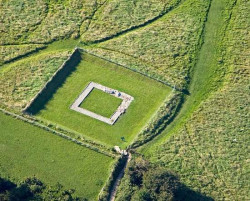
  • A Romano-British temple: As people from across the Roman empire settled in Britain, hybrid religions developed, fusing imported deities with Celtic ones. Around AD 370, a Romano-British temple was built within the long-deserted hillfort. A new stone gateway was built across the eastern entrance, suggesting that the ancient ramparts had become the boundary of a sacred enclosure.

Facilities

  • Parking: Approximately 20 spaces with access to the hillfort directly from the free car park. The access lane is too narrow for a coach. 3-4 minibuses could be accommodated, however parking is not controlled.
  • Dogs: Dogs are welcome, but please keep them on a lead as sheep graze the site.

Price

Price: Free

Birthday Parties

Offer Birthday Parties: No

Open any reasonable time during daylight hours.

Address: Maiden Castle Road, Dorchester, Dorset DT2 9PP, UK

Post Code: DT2 9PP

Council: Dorset

County: Dorset

  • Road Access: Car park is off Maiden Castle Road, 2 miles / 3 km southwest of Dorchester.
  • Bus Access: Catch First Bus 10, First Bus X51 or Damory Coaches Bus CR8 from Dorchester Brewery Square (Stop C) to Monkton Park and walk 0.7 mile / 1 km via Winterborne Monkton Village to Maiden Castle. Be careful crossing the A354. You can also travel on these bus routes from Weymouth to Monkton. Or catch First Bus X51, from Dorchester Trinity Street (Stop C2) to Martinstown, then walk 1 mile / 1.6 km via footpaths to Maiden Castle.
  • Train Access: Dorchester South or Dorchester West Stations (both 2 miles / 3 kms from Maiden Castle). From Dorchester South Station catch Bus X51 or Bus CR8 to Monkton Park. From Dorchester West Station walk 350 metres to Brewery Square (Stop C) to catch Buses 10, X51 or CR8 to Monkton Park.
  • Bicycle Access: Find this site on The National Cycle Network.
  • Parking: Approximately 20 spaces with access to the hillfort directly from the free car park. The access lane is too narrow for a coach. 3-4 minibuses could be accommodated, however parking is not controlled.

0

0 Reviews

Rating breakdown

5
80% Complete (danger)
0
4
80% Complete (danger)
0
3
80% Complete (danger)
0
2
80% Complete (danger)
0
1
80% Complete (danger)
0

Get the best blog stories into your inbox!