Muckross House, Gardens & Traditional Farms

The National Park, Guiding Service at Muckross House, Killarney, County Kerry, IE, null
1-90 Years
Paid

Description

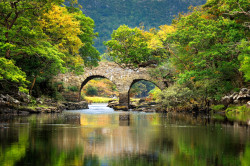
Muckross House, Gardens & Traditional Farms is one of Ireland’s premier visitor attractions, set in the heart of Killarney National Park. It offers a rich mix of history, culture, and natural beauty with stunning landscapes and heritage experiences. It’s an ideal destination for families, history lovers, and anyone exploring the scenic southwest of Ireland.

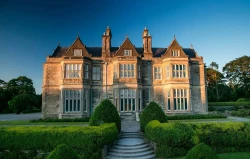
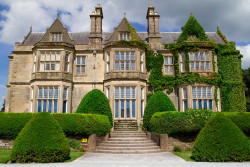
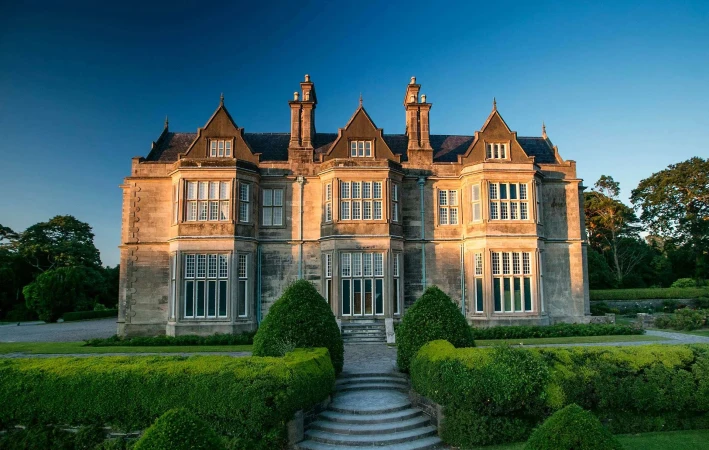
Visitors can explore the historic Muckross House, a 19th-century mansion overlooking Muckross Lake, along with beautifully landscaped gardens. The attraction also features Traditional Farms, where you can step back into 1930s–40s rural Ireland and see working farms, cottages, animals, and crafts like blacksmithing and carpentry. Additional highlights include a craft centre with pottery, weaving, and bookbinding, a woodland playground, and scenic walking areas within the national park. 

Entry prices vary depending on the experience, with House tickets from €9, Farms from €11, and combined tickets from €18, along with discounted rates for children, students, and families. 

Overall, Muckross offers a complete cultural and outdoor experience in a breathtaking setting. Its blend of history, nature, and traditional Irish life makes it a must-visit attraction. It is a memorable and enriching destination for visitors to Killarney.

Features

  • Paid
  • Host birthday parties: No

Features

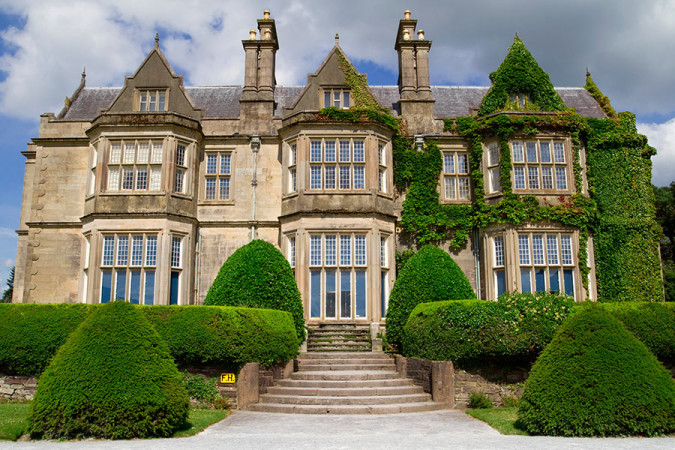
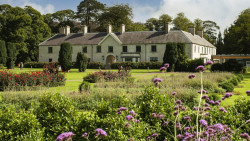
  • Muckross House: The house stands close to the shores of Muckross Lake, one of Killarney’s three lakes, famed worldwide for their splendour and beauty. As a focal point within Killarney National Park, Muckross House is the ideal base from which to explore this landscape. Muckross House was built for Henry Arthur Herbert and his wife, the water-colourist Mary Balfour Herbert. This was actually the fourth house that successive generations of the Herbert family had occupied at Muckross over a period of almost two hundred years. William Burn, the well-known Scottish architect, was responsible for its design. Building commenced in 1839 and was completed in 1843.
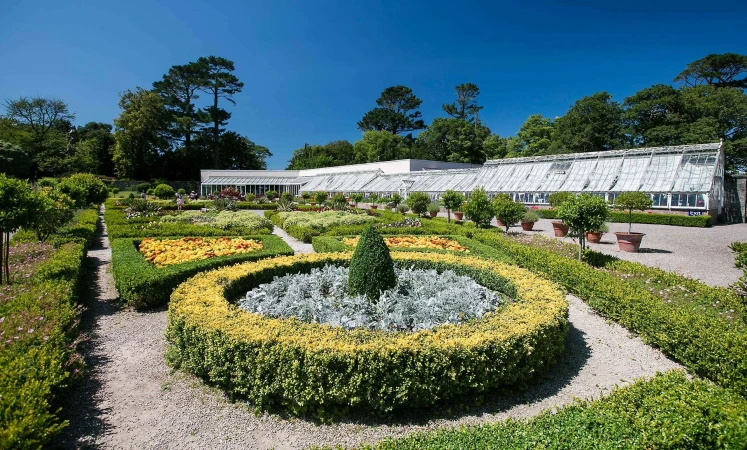
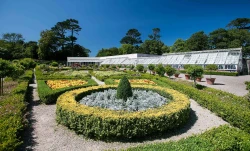
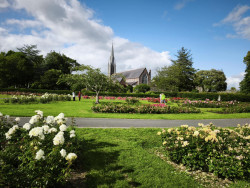
  • Muckross Gardens: The Herbert family completed the building of Muckross House in 1843 and work probably commenced on the layout of the present Gardens at that time. Indeed, it appears likely that this work may have provided famine relief during the years of the Great Hunger (1845-1850). In April 1846 a local newspaper reported that 50 additional men were to be employed at Muckross at ‘increased wages’. It appears that this workforce was intended to work in the gardens on the construction of ‘some noble terraces of refined taste and elegant design’ (Kerry Evening Post, 15 April 1846). Many of the Scots Pine, Silver Fir, Oaks and Beeches in the vicinity of Muckross House may also have been planted during that decade. 
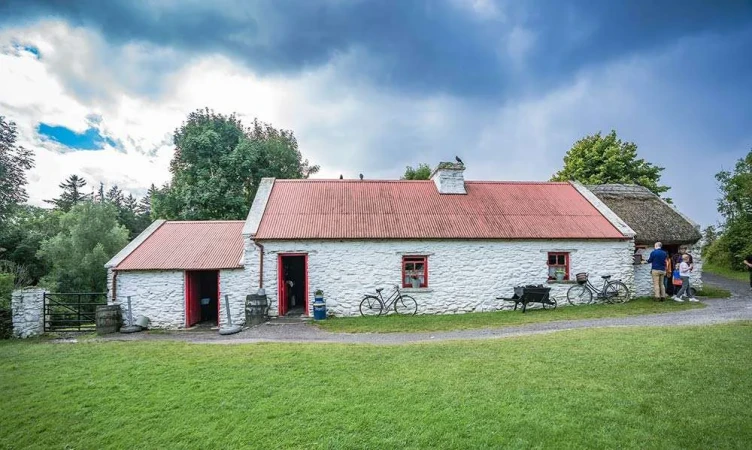
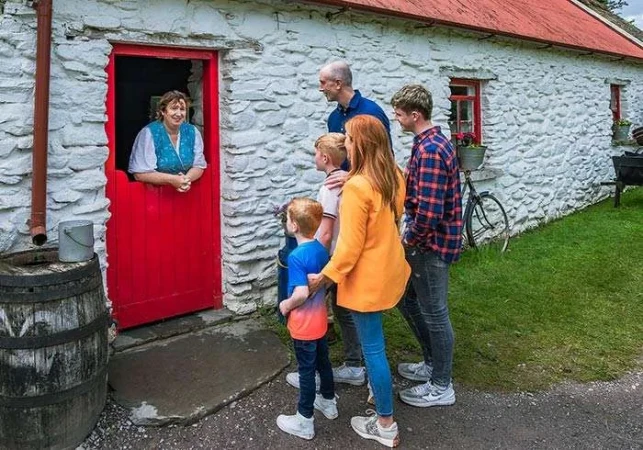
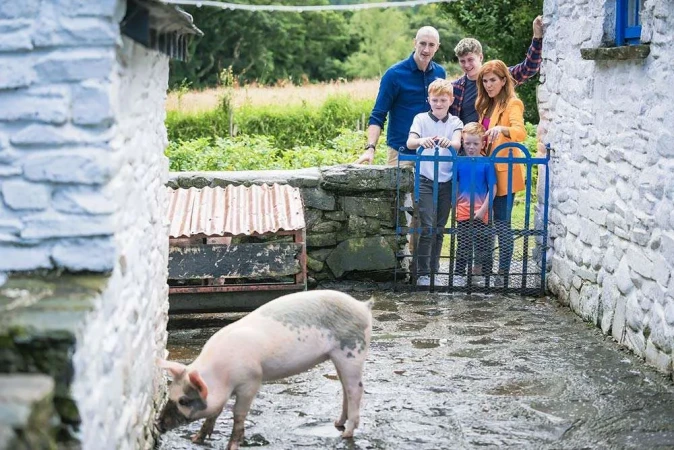
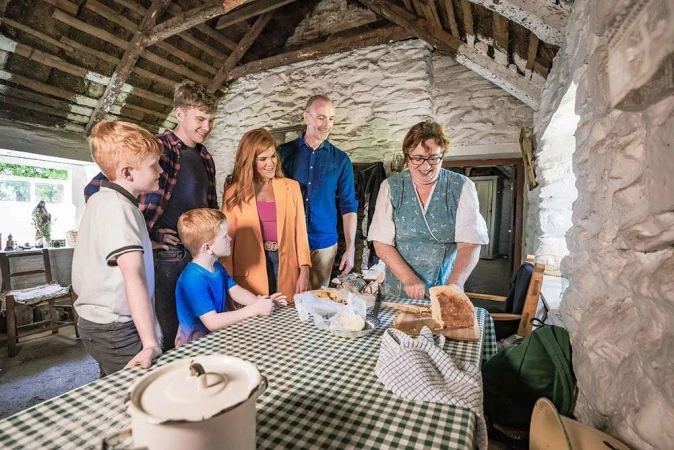
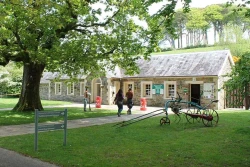
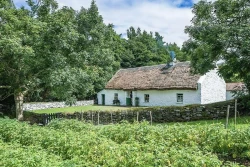
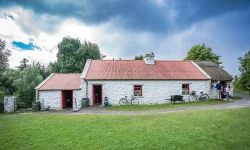
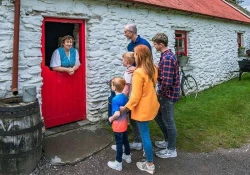
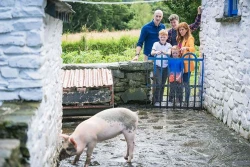
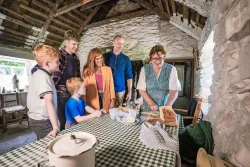
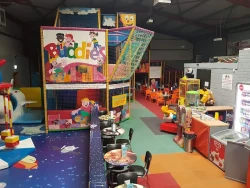
  • Traditional Farms: Step back in time at Muckross Traditional Farms... and visit a very different place – the Ireland of the 1930s and 1940s. In those days a trip to the well was still a daily chore for the housewife and electricity had yet to be introduced to the countryside. Visit three separate working farms (small, medium and large), each complete with animals, poultry and machinery. The farm dwellings are furnished in traditional style, complete with dressers, settle beds and meal bins. There is also a Labourer’s Cottage, a Carpenter’s Workshop and a Blacksmith’s Forge. The animal petting area is a favourite with both adults and children. In addition, the Woodland Playground provides a sheltered picnic area where parents can relax while the youngsters enjoy the swings and slides

Facilities

  • Parking: Separate parking facilities are available for cars and coaches. There is no parking charge.
  • Food & Drinks: The Garden Restaurant and Mucros Craft Shop are located within the Walled Garden Centre.

What to see

Tour the Farms

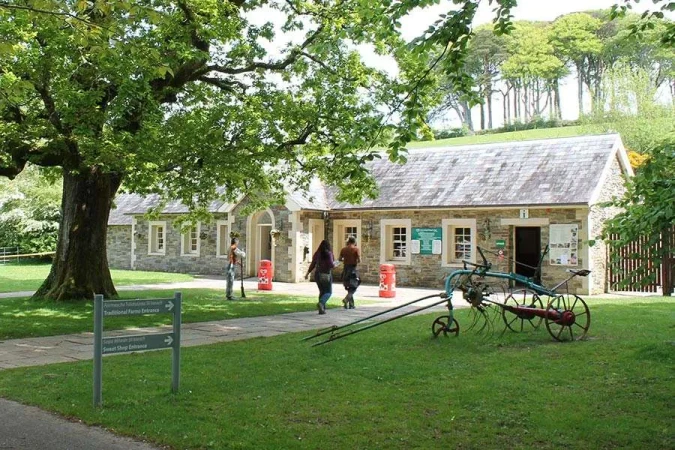
  • Muckross Traditional Farms reception: This building houses the main information centre for Muckross Traditional Farms, as well as a small shop. Admission tickets to both Muckross Traditional Farms and Muckross House are available here.
  • Kissane's Small-Sized Farm: This farm is representative of a holding af about 20 acres, where mixed farming (some dairying and tillage) was practiced. The two-roomed dwelling follows the natural slope of the land and has an outhouse attached at either end. This linear layout was typical of a small farm where fewer outbuildings were required.
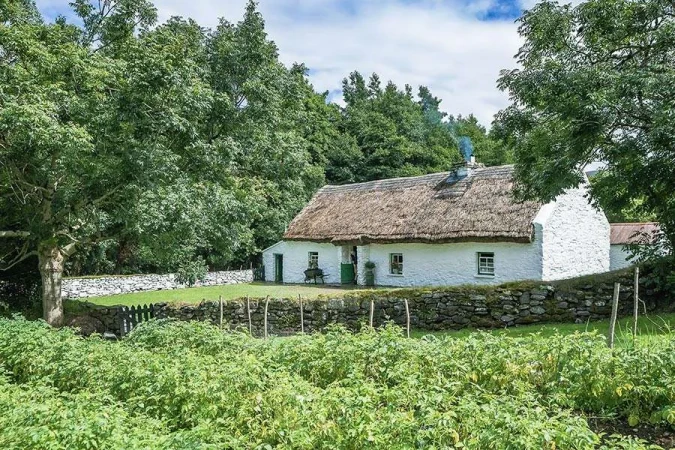
  • O'Connor's Labourer's Cottage: Throughout much of rural Ireland the word ‘cottage’ was applied exclusively to a dwelling house built for a farm worker. Other dwellings, no matter how humble or small, were never referred to as cottages. Labourer’s Cottages were erected from the early 1880s onwards and they greatly improved the housing conditions of the landless poor. Usually an acre, or half-acre of land was attached to the cottage, which allowed the labourer to be self-sufficient in potatoes and vegetables.
  • Foley's Medium-Sized Farm: This farm is typical of a land holding of from 40 to 50 acres, where mixed farming, both tillage and dairying, was practised. The outhouses are built in a row parallel with the rear wall of the dwelling. The space between the dwelling and the outhouses serves as the farmyard. This farmyard layout is found in the north and west of Ireland but is typical of west Munster.
  • Quille's Large-Sized Farm: This farm represents a large land holding of approximately 100 acres. Aside from dairying, this farmer would have grown grain crops such as wheat, barley and oats. Here the dwelling and outhouses are arranged around a rectangular space, which forms the farmyard. This was the typical farmyard layout for large and medium-sized farms throughout much of Munster, Leinster and parts of east Connaught.
  • The Carpenter's Workshop: The carpenter made a range of furniture for the dwelling including dressers, tables, meal bins, chairs, presses, beds and cupboards, knife boxes and saltboxes. He also made barrows, carts and wheels, windows and doors and completed the structural work on the dwelling itself.
  • Harness-maker: The harness-maker, or saddler, made and repaired harness, which was used for both horses and donkeys. Saddles and bridles were made for riding horses, while winkers, collars, straddles and breeching, was made for working horses. The skill of the harness-maker almost disappeared with the arrival of motorised transport. However, an increase in the leisure-time activities of carriage driving and horse riding has led to a demand for these skills once more.
  • Blacksmith's Forge: The blacksmith was considered one of the most important craftsmen in the community. He made and repaired many items for the farmer including: spades, ploughs, shovels, slanes, forks, sickles, scythes, gates, bolts, hasps and hinges. The forge was a regular meeting place for the men of the locality. There they were brought up to date on the latest news of local interest and of happenings further afield.
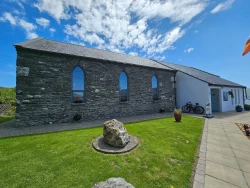
  • The Schoolhouse: State-sponsored primary school education was introduced to Ireland in 1831 and was organised at parish level. This schoolhouse is typical of many rural Irish schools built from c.1910. Divided into two rooms internally, each teacher usually taught several different classes within the one classroom. Pupils were expected to bring sods of turf to school for the open fires. Separate dry toilets, for boys and girls, were always located in the yard at rear.
  • The Crossroads: Crossroads were popular places where people informally met and exchanged the news of the day. If music was available, they often engaged in crossroads dancing. These locations were also frequently the site of the large bonfires, which were lit on 23 June, the eve of the Feast of St John.
  • The Well: Drawing water from the well for food preparation, washing and all other domestic chores, was part of the daily workload. This ask was usually performed by women and children.
  • The Water Pump: The Water Pump was once a familiar feature of the Irish Countryside.
  • Farm Machinery: All work on Muckross Traditional Farms is carried out in the old, time honoured way, using horse-drawn machinery. A small selection of the most commonly used pieces is depicted here.

Muckross Craft Centre

  • Muckross Craft Shop: Muckross Craft Shop is located within the Walled Garden Centre, which lies adjacent to Muckross House. It is a popular shopping venue, not only with visitors to Muckross, but also with our own local Killarney residents.
  • Muckross Pottery: Set against the backdrop of the world-famous Muckross House and Killarney National Park, Margaret Phelan designs and produces unique high Quality hand-thrown stoneware pottery.
  • Muckross Bookbindery: At our Bookbindery workshop we employ traditional bookbinding skills, with modern conservation methods, to provide the very best, all-round, care for items on paper.
  • Mucros Weaving: At our Weaving workshop we weave scarves using only the finest quality yarns on Hattersly looms that are almost 200 years old. Because all our scarves are individually woven they have a selvedge on each side ensuring they will last and its gives each scarf its quality finish.

Price

Price: Paid

Price Details

  • Adult: House €9.00 / Farms €11.00 / Joint €18.00
  • Groups, Senior Citizen, Student (over 18): House €7.50 / Farms €9.50 / Joint €15.00
  • Child (age 3–5): House Free / Farms €8.00 / Joint €8.00
  • Child (age 6–18): House €6.00 / Farms €8.00 / Joint €12.00
  • Family (2+2): House €26.00 / Farms €30.00 / Joint €39.00
  • Family (2+3): House €30.00 / Farms €34.00 / Joint €41.00

Pricing URL: https://muckross-house.ie/plan-your-visit/#tickets

Birthday Parties

Offer Birthday Parties: No

Muckross House Opening Times 2026

  • January-March: 9.15am-5.30pm, Last Admission 4pm
  • April-June: 9.15am-6pm, Last Admission 4.40pm
  • July-August: 9.15am-7pm, Last Admission 5.40pm
  • September-October: 9.15am-6pm, Last Admission 4.40pm
  • November-December: 9.15am-5.30pm, Last Admission 4pm

Muckross Traditional Farms Opening Times 2026

  • Mid-March: Sat & Sun, 1pm-6pm
  • April & October: Sat, Sun & Bank Holidays, 1pm-6pm
  • May & September: 7 days a week, 1pm-6pm
  • June-August: 7 days a week, 10am-6pm
  • November-February: Closed

Address: The National Park, Guiding Service at Muckross House, Killarney, County Kerry, IE, null

Post Code: IE

Council: Killarney

County: County Kerry

The town of Killarney is situated in the south-west of Ireland, on the border of Killarney National Park. Distances from the main cities are as follows:

  • Dublin: 333km (200 miles); Cork: 83km (50 miles); Galway: 250km (150 miles).
  • Killarney has direct rail links to Dublin and Cork, while Kerry Regional Airport is situated 15km (9 miles) from the town.
  • When travelling to Muckross, from Killarney town centre, take the main Kenmare road (N71) for a distance of approximately 6km (3.6 miles). 
  • The only vehicle access is via the large entrance gate located on the right, a short distance beyond the Muckross Park Hotel. This provides direct access to both Muckross House and the Reception of Muckross Traditional Farms.
  • You can also gain access on foot, by bicycle, or by jaunting car, at other entrances along the same road (N71). These entrances, most of which are closer to Killarney town, are signposted.

5

0 Reviews

Rating breakdown

5
80% Complete (danger)
0
4
80% Complete (danger)
0
3
80% Complete (danger)
0
2
80% Complete (danger)
0
1
80% Complete (danger)
0

Get the best blog stories into your inbox!