Description
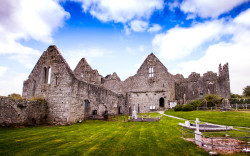
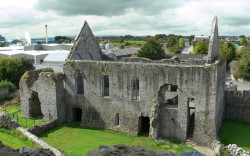
Askeaton Franciscan Friary is an imposing historic monument located in Askeaton village, County Limerick, that offers a fascinating look into early Christian monastic life and dramatic medieval histories for families exploring the region. Believed to have been founded around 1389 by Gerald FitzGerald, the 3rd Earl of Desmond (the legendary "poet earl"), this striking stone ruin dates back to the late 14th or early 15th century. It stands out as an intriguing regional history stop for families who want to experience an authentic heritage trail in a peaceful countryside setting on the banks of the River Deel.
Admission to these historic ruins is completely free, making it an excellent budget-friendly heritage stop for parents travelling with children. Visitors can walk straight into the open-air grounds to explore the ancient landmarks at their own pace without needing to book tickets or pay entry fees.
If you are looking for a quick day out with family and kids that combines mystery, unique architecture, and ancient stone ruins, this historic landmark is a wonderful site to add to your travel plans. The atmospheric roofless structures and expansive cloisters instantly transport young minds to an era of ancient craftsmen, raiding soldiers, and historical monks, sparking creative historical imagination.
Features
- Free
- Host birthday parties: No
Features
Key Features
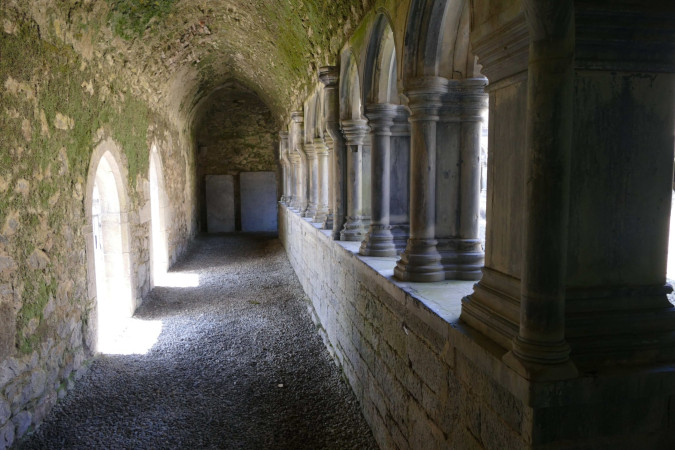
- The St Francis Cloister Carving: Features a unique and beautiful medieval panel carving on the north side of the cloister depicting St Francis.
- The Five-Light East Window: Includes a spectacular 15th-century simple traceried window in the east wall that historically flooded the chancel with brilliant natural light.
- The Intricate Cloister Arcade: Showcases a perfectly preserved pointed arcade of wedge-shaped colonnettes arranged in groups of three, complete with visible historic plaster and wattling.
- The Dual-Storey Sacristy & Domestic Ranges: Contains multi-level medieval additions featuring a barrel-vaulted ground-floor chamber with an original fireplace and an upper living level accessed via spiral stairs.
Highlights
- The Cloister and St Francis Panel: Positioned on the southern side of the church structure is a beautiful, complete courtyard walkway. Info: School-aged kids can walk around the pointed arcade to spot the special stone panel carving on the northern wall that depicts Saint Francis. It provides an excellent visual layout for talking to children about how medieval monks lived and prayed together centuries ago.
- The Five-Light Traceried East Window: Situated at the far eastern gable of the ruined church chancel is a massive stone window frame. Info: Young historians can look closely at the surviving limestone tracery and imagine how the five high openings brightly lit up the main altar during early morning services. It helps paint a wonderfully vivid picture of medieval craftsmanship before the invention of modern lighting.
- The Two-Storey West Range and "Prison": Located on the western edge of the domestic layout is a large residential structure. Info: Kids can inspect the barrel-vaulted rooms on the ground floor, explore the south space traditionally called the "prison", and look for the old garderobe latrine. It serves as an exceptional backdrop for teaching kids about the daily sanitary routines of ancient monastic communities.
- The Transept and Drum Column Arches: Branching out from the single-aisled main church building are two large pointed arches. Info: Families can walk underneath these massive stone spans to admire how they securely rest on a thick, drum-shaped central column. It provides a safe, quiet open-air space for children to study structural adaptations and look for ogee-headed window shapes.
- The Ancient Mass Dial Carving: Etched directly into the surface of the northern cloister ambulatory wall is a centuries-old timepiece. Info: Curious kids can check out the small lines carved into the stone that helped the friars track the position of the sun to tell the time for daily prayers. It offers an exceptional hands-on lesson in identifying basic medieval Irish church tracking systems.
Beyond the Main Attraction
- Askeaton Castle: Located just 0.4km away on a natural island in the River Deel, featuring a grand 15th-century Great Hall, medieval "paradise" gardens, and an old Hellfire Club ruin.
- King John's Castle: Situated roughly 27km east on King's Island in Limerick City, a massive Norman stronghold packed with interactive visitor exhibitions and dramatic battlements.
- Grange Stone Circle: Positioned a short drive away near Lough Gur, Ireland's largest and oldest complete stone circle, featuring an incredible ritual landscape perfect for older kids.
- Desmond Castle Adare: Located approximately 16km southwest on the banks of the River Maigue, offering seasonal guided tours of an Anglo-Norman fortress.






 0.42 miles