Greyfriars

Greyfriars, Gloucester, UK
1-99 Years
Paid

Description

The Franciscan friary of Gloucester Greyfriars was founded in about 1230, one of three friaries established in the town in the mid 13th century. In the 1330s it was home to about 30 friars, who performed a daily round of church services and masses, and also preached to the people of Gloucester.

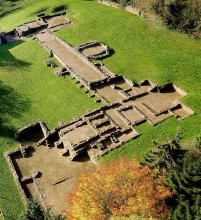
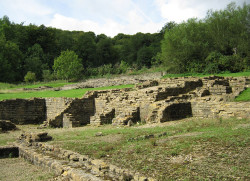
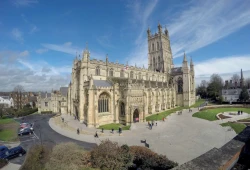
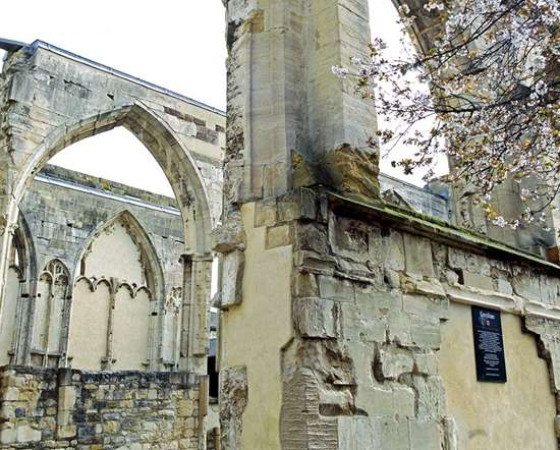
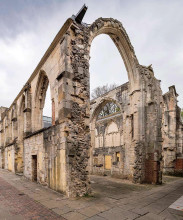
Although most of the medieval buildings of the friary no longer survive, the ruined church of Greyfriars – built just two decades before the Dissolution of the Monasteries – is a rare surviving example of a Tudor monastic church. 

Free Entry. If you are looking for Best place for day out with kids and families then this is the perfect destination offering fun, adventure, and unforgettable memories for everyone.

Features

  • Paid
  • Host birthday parties: No

Features

  • History of Greyfriars, Gloucester: The Franciscan friary of Gloucester Greyfriars was founded in about 1230, one of three friaries established in the town in the mid 13th century. In the 1330s it was home to about 30 friars, who performed a daily round of church services and masses, and also preached to the people of Gloucester.
  • Although most of the medieval buildings of the friary no longer survive, the ruined church of Greyfriars – built just two decades before the Dissolution of the Monasteries – is a rare surviving example of a Tudor monastic church.
  • Foundation: Thomas de Berkeley, Lord of Berkeley Castle (16 miles from Gloucester), granted land in Gloucester to the grey friars in about 1230. It may well have been this gift that established the friary. King Henry III, a generous sponsor of churches and monasteries, granted cash and timber to the friars in the 1230s and 1240s.
  • The Franciscan friars: Unlike the older orders of monks, who lived secluded lives within their monasteries, friars went out into the wider community, tending to the spiritual needs of lay people.
  • The friary’s patrons: Following the initial gift by Thomas de Berkeley, later members of the family continued to sponsor the friary with gifts of money. Nearly three centuries after its foundation, in 1518 or 1519, Sir Maurice Berkeley, also known as 4th Baron Berkeley and a descendant of Lord Thomas, agreed to pay £6 13s 4d a year to the friars so that they could rebuild their church. A codicil to his will enabled his executors to continue paying for the works after he died in 1523. By about 1530 the church had been almost completely rebuilt.
  • The Tudor church: The Tudor monastic church of the 1520s had two equal spaces that together formed the nave, where Gloucester townsmen and women went to listen to the friars’ sermons. At the east end was a single space, the choir, where the friars performed their daily cycle of services. The whole church was about 75 metres long.
  • Closure: Like all monastic houses across England, the friaries could not escape the religious upheaval of the reign of Henry VIII, after he broke away from the pope and the Catholic Church in Rome, a move driven largely by his desire to divorce Katherine of Aragon. Henry, although still a Catholic, disliked traditional monasticism and coveted the monasteries’ wealth. In the 1530s he began closing England’s monasteries, confiscating their rich assets for the Crown.
  • Conversion and demolition: The Gloucester alderman and MP Thomas Payne (who had assisted the king’s commissioner in 1538) bought the closed friary in 1544. He converted it into his private mansion and lived there until his death in 1560.
  • Excavation and conservation: In 1965 the Ministry of Public Buildings and Works began conservation work on the site after a fire. By modern standards the conservation was severe: they decided to dismantle the damaged roof of the nave and strip the post-medieval features of the church – including the floors, stairs and windows of its converted townhouses. The early 19th-century Greyfriars House was retained, but the rest of the church was stabilised as a roofless ruin.

Facilities

  • Parking: Paid parking is available in Gloucester City Centre.
  • Food & Drinks: Gloucester has a wealth of facilities, shops and food outlets which are all within walking distance.

Birthday Parties

Offer Birthday Parties: No

Open any reasonable time during daylight hours.

Address: Greyfriars, Gloucester, UK

Post Code: GL1 2EZ

Council: Gloucester

County: Gloucestershire

  • Road Access: On Greyfriars Walk.
  • Train Access: Gloucester 1⁄2 mile.
  • Bus Access: Gloucester Bus Station 1⁄2 mile.
  • Bicycle Access: Find this site on The National Cycle Network.
  • Parking: Paid parking is available in Gloucester City Centre.

0.00

0 Reviews

Rating breakdown

5
80% Complete (danger)
0
4
80% Complete (danger)
0
3
80% Complete (danger)
0
2
80% Complete (danger)
0
1
80% Complete (danger)
0

Get the best blog stories into your inbox!