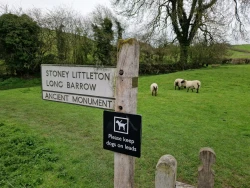
Stoney Littleton Long Barrow

Description

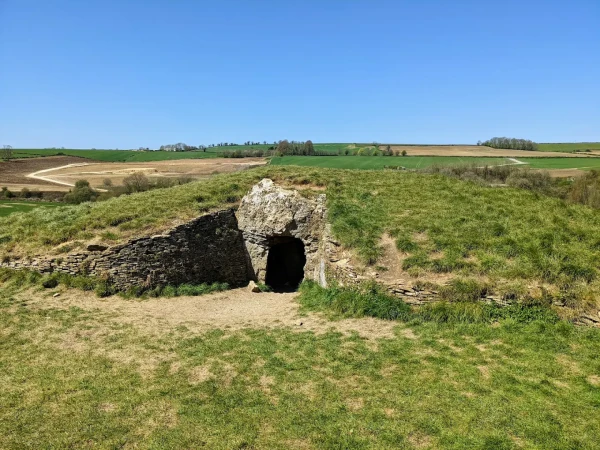
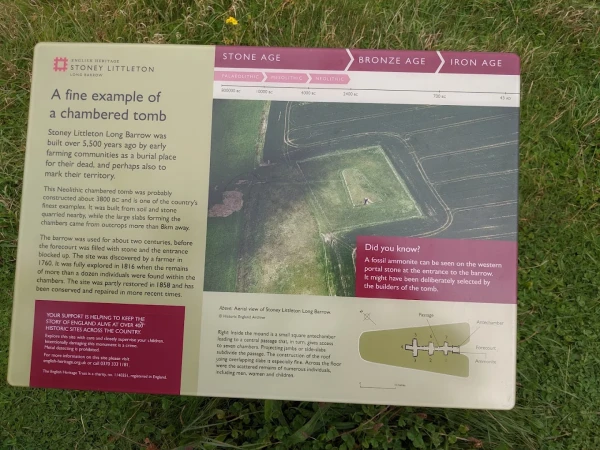
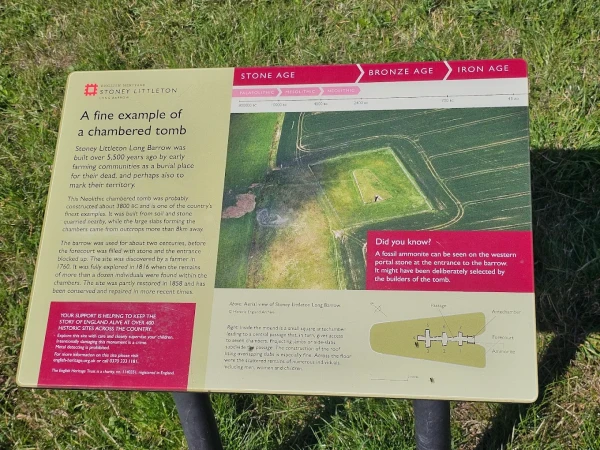
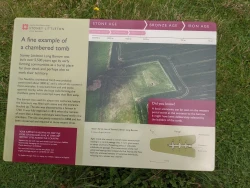
Stoney Littleton Long Barrow is one of the country’s finest accessible examples of a Neolithic chambered tomb. Dating from about 3500 BC, it is 30 metres long and has multiple burial chambers open to view. This stone and earth tomb in Somerset was built in the early Neolithic period, probably between 3750 and 3400 BC. 

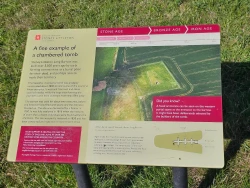
When excavated it was found to contain the bones and ashes of several men, women and children, perhaps three generations of important local farmers. A tomb for the dead, it may also have been a religious shrine for the living. The tomb is a fine example of a chambered long barrow, among the oldest type of ‘building’ in Britain. At least 140 such barrows were built in the Cotswolds.

Free Entry. If you are looking for Best place for day out with kids and families then this is the perfect destination offering fun, adventure, and unforgettable memories for everyone.

Features

  • Free
  • Host birthday parties: No

Features

  • History of Stoney Littleton Long Barrow: This stone and earth tomb in Somerset was built in the early Neolithic period, probably between 3750 and 3400 BC. When excavated it was found to contain the bones and ashes of several men, women and children, perhaps three generations of important local farmers. A tomb for the dead, it may also have been a religious shrine for the living. The tomb is a fine example of a chambered long barrow, among the oldest type of ‘building’ in Britain. At least 140 such barrows were built in the Cotswolds.
  • Long barrows: A ‘barrow’ is a prehistoric mound of earth and stone, built as a tomb, and intended to be a prominent monument in the landscape. The tradition of burying and commemorating the dead in this way developed in western Europe in the 5th millennium BC and was brought to Britain in the early Neolithic period, from about 3800 BC onwards.
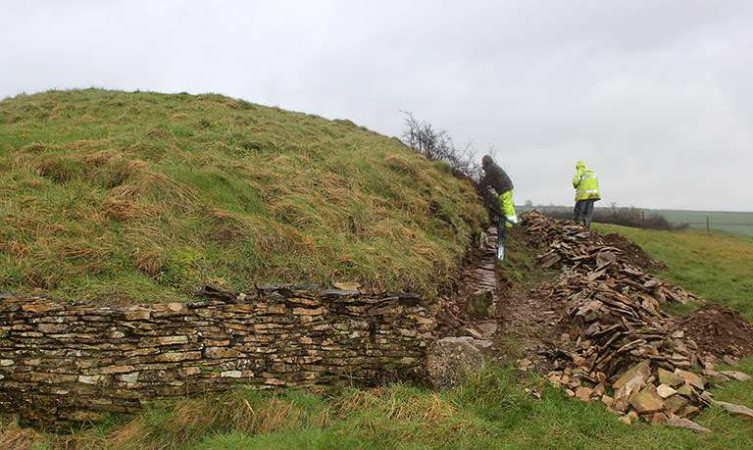
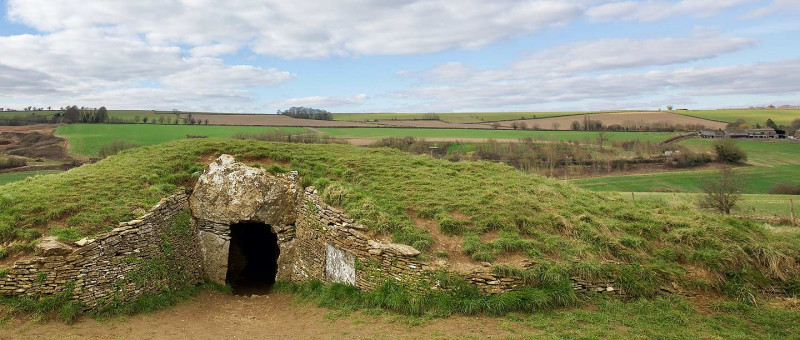
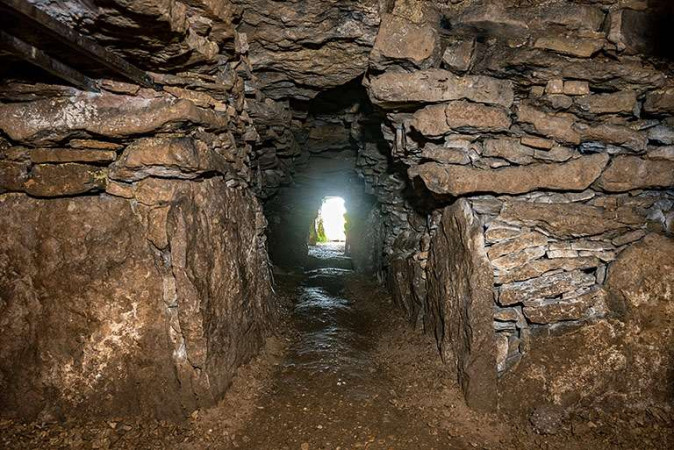
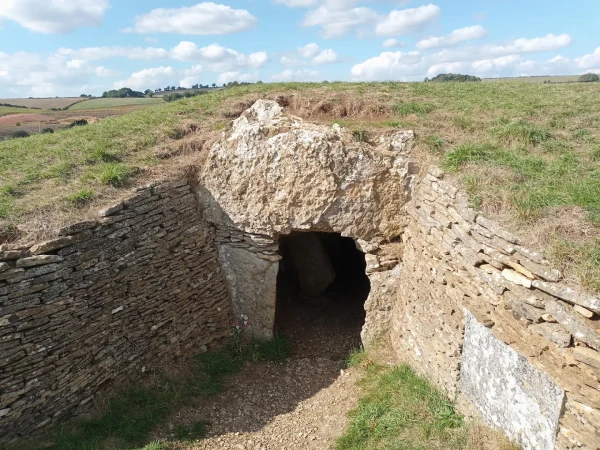
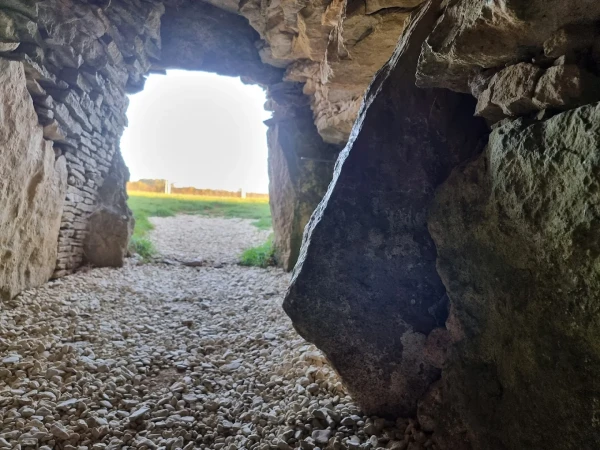
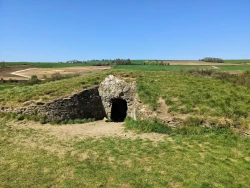
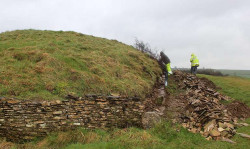
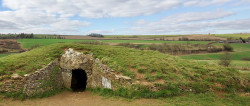
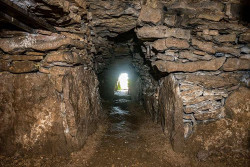
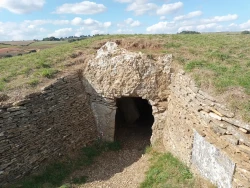
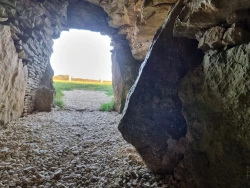
  • Description: The Stoney Littleton chambered long barrow is about 30 metres (100 feet) long and 12.5 metres (40 feet) wide at the broader entrance end. The mound is 2 metres (6 feet) high but was once even taller. A low dry-stone wall retains the earthen mound, and at the broader end a pair of substantial flanking walls defines a forecourt and leads to a small entrance. This leads into a narrow passage, some 13 metres (42 feet) long.
  • Excavation and investigation: In about 1760 a local farmer opened the top of the barrow from above to quarry some stone. Half a century later, in 1816, the local rector, John Skinner, and the early archaeologist Sir Richard Colt Hoare excavated the interior of the barrow. They later reported: ‘We met with many fragments of bones, etc, which had probably been removed from the sepulchral recesses [the chambers off the passage].’ As well as the skeletal remains, they found cremated human bone and a pot. Although their excavation was not up to modern archaeological standards, they published their discoveries in the journal Archaeologia, including detailed plans and sections. They also kept some of the human remains they had discovered, some of which are now in the Bristol Museum and Art Gallery.
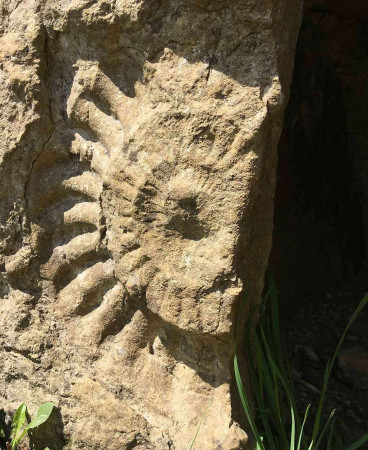
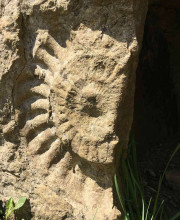
  • The ammonite fossil: On the stone slab that forms the left jamb of the entrance into the passage there is a prominent ammonite fossil. This is a sea creature of the extinct genus Arietites, related to the modern octopus but with a large spiral shell. Fossils like these were formed about 200 million years ago, when shallow seas covered much of what is now southern Britain. Ammonite fossils are the result of a process known as permineralisation, which occurs when dissolved mineral deposits fill the cavities of a decayed animal, forming a rock in the creature’s shape.
  • The commemorative plaque: As part of the restoration of 1857–8, a stone tablet was placed in the right (eastern) forecourt wall of the barrow. The inscription read: This tumulus, declared by competent judges to be the most perfect specimen of Celtic antiquity still existing in Great Britain, having been much injured by the lapse of time, or the carelessness of former proprietors, was restored in 1858 by Mr T.R. Joliffe, the lord of the hundred [of Wellow], the design of the original structure being preserved, as far as possible, with scrupulous exactness.

Facilities

Parking: There is a small free car park off Littleton Lane, approximately one mile from Wellow.

Price

Price: Free

Birthday Parties

Offer Birthday Parties: No

Open any reasonable time during daylight hours.

Address: Bath BA2 8NR, UK

Post Code: BA2 8NR

Council: Bath and North East

County: Somerset

  • Road Access: 1 mile south of Wellow off A367. Narrow lane west of village leads to small parking area (1 mile), then 1⁄4 mile walk.
  • Bus Access: Somerbus service 757 (Wed only) to Wellow then 1 mile walk from village. Otherwise take First 173, 178 or 184 to Peasedown St John and walk 21⁄2 miles.
  • Train Access: Bath Spa 6 miles.
  • Bicycle Access: Find this site on The National Cycle Network.
  • Parking: There is a small free car park off Littleton Lane, approximately one mile from Wellow.

0

0 Reviews

Rating breakdown

5
80% Complete (danger)
0
4
80% Complete (danger)
0
3
80% Complete (danger)
0
2
80% Complete (danger)
0
1
80% Complete (danger)
0

More Day Outs in Bath and North East Somerset

Get the best blog stories into your inbox!